Iriel, Analía
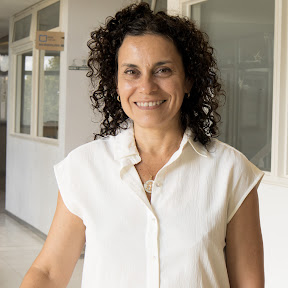
Independent Researcher CONICET
Associate Professor, ECyT UNSAM
Professional resume + Expertise
Analía Iriel holds a degree in Chemistry, with a specialization in Analytical Chemistry, from the National University of Litoral (UNL), and a PhD from the University of Buenos Aires (UBA) in Inorganic, Analytical and Physical Chemistry. She is an Independent Researcher at CONICET and conducts her research at the Institute of Environmental Research and Engineering (IIIA, UNSAM-CONICET), School of Habitat and Sustainability, National University of San Martín.
Her research focuses on the behavior, fate, and effects of contaminants in productive environments, with particular emphasis on veterinary pharmaceuticals and other veterinary-use products. Her work addresses the interactions of these contaminants with soils, their persistence, dissipation and degradation processes, their ecotoxicological effects, and the development of environmentally sustainable treatment and remediation strategies. Within this framework, she investigates the development and evaluation of biomixtures and adsorbent materials, as well as phytoremediation strategies and the responses of organisms and biological communities exposed to contaminants.
Throughout her career, she has also conducted research on the occurrence, mobility, and removal of arsenic, fluoride, and pesticides in environmental systems, integrating approaches from analytical chemistry, environmental chemistry, and ecotoxicology. She has extensive experience in the supervision and training of undergraduate and graduate students, leadership and participation in research projects, and the evaluation of research projects, researchers, and scientific manuscripts.
Keywords
Microcontaminants, Environmental remediation, Biobeds, Dissipation.
Research focus
Veterinary pharmaceuticals in productive environments: behavior in soils, toxicological effects, and remediation strategies.
Her current research focuses on the environmental fate of veterinary pharmaceuticals in productive environments, with particular emphasis on their behavior and dissipation in soils, potential toxicological effects, and the development of sustainable remediation strategies. Her work includes the evaluation of biomixtures and other remediation approaches for the treatment of contaminated soils.